


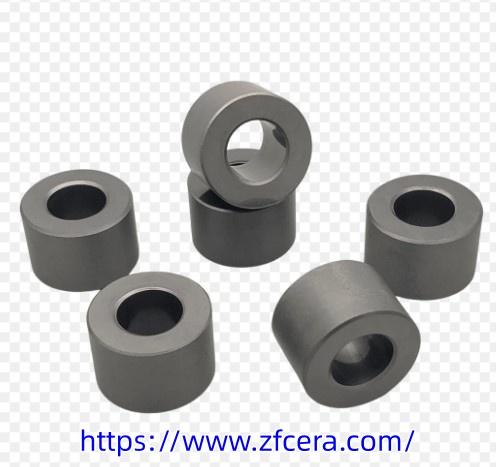
As renewable energy platforms evolve, Silicon Carbide Ceramics from zfcera play a crucial role in systems where hydrogen channels, fuel cells, and photon-driven modules operate under thermal and chemical stress. The ceramic composition ensures consistent structural integrity while facing high temperature gradients, chemical exposure, and dynamic loading in rotating units, allowing engineers to maintain stable energy flow and precise component alignment. Its dense microstructure resists minor abrasion caused by particle contact, providing long-term operational support for devices that integrate fluid dynamics with mechanical motion.
In turbines, high-speed pumps, and rotary reactors, the ceramic protects shafts, blades, and sliding interfaces from accelerated wear, preventing geometric distortion while reducing maintenance interruptions. Components that experience rapid rotation and repeated contact often generate friction-induced stress, which conventional materials fail to withstand. This ceramic maintains surface uniformity and spatial orientation across prolonged operational intervals, ensuring rotors, couplings, and alignment plates retain predictable interaction patterns. In energy storage channels, it prevents uneven flow distribution by preserving consistent passage dimensions under cyclic thermal loading.
Hydrogen conduits, reformer trays, and solar modules demand materials capable of handling rapid energy fluctuations while keeping channels intact. The ceramic sustains dimensional order even as expansion, contraction, and vibration cycles occur during operation. High-speed mixers and centrifugal pumps in renewable processing lines similarly benefit from reduced abrasion and maintained surface cohesion. By resisting mechanical fatigue and chemical wear simultaneously, the ceramic enhances equipment longevity and helps planners preserve predictable performance throughout extensive duty periods.
Integration of ceramic units into hybrid energy machinery ensures that moving assemblies, support brackets, and interface zones function with uniform precision. The material mitigates microscopic surface deformation that could otherwise compromise rotor alignment or energy flow consistency. Its application in fast-moving components prevents premature failure, maintains operational accuracy, and supports coordinated interaction between high-speed rotors and surrounding chambers. These properties make it suitable for modern energy infrastructure, where sustained reliability under stress is critical.
Industrial operators seeking structured ceramic solutions for renewable energy and high-speed machinery can explore curated selections at https://www.zfcera.com/ , offering units that sustain dimensional order, resist wear, and enable dependable operation. Silicon Carbide Ceramics and zfcera continue to define the standards for endurance and precision within advanced engineering systems.

 Chinese