


Global Smart Hospitality Market: Trends, Drivers, and Growth Outlook (2024–2030)
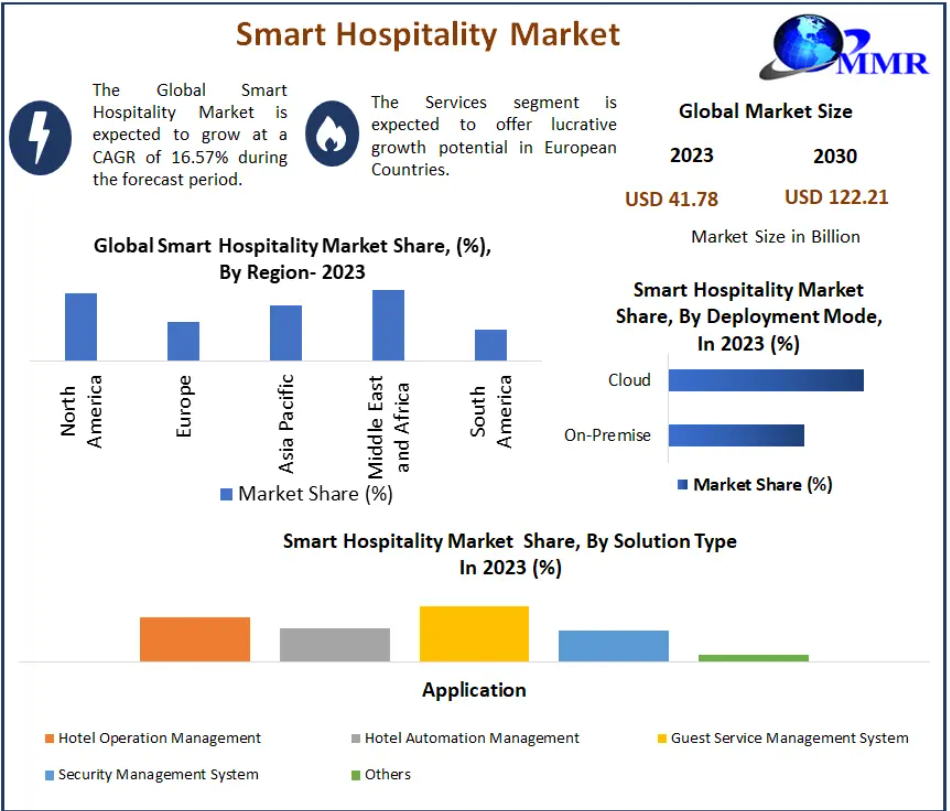
The Global Smart Hospitality Market is undergoing rapid transformation, expanding from USD 41.78 billion in 2023 to an estimated USD 122.21 billion by 2030, registering a CAGR of 16.57% during the forecast period. This strong growth reflects the hospitality industry's accelerated integration of digital, connected, and intelligent technologies to elevate guest experience, enhance operational efficiency, and strengthen service personalization.
Overview: Technology Reshaping Hospitality Experiences
Smart hospitality refers to the deployment of digital tools—such as IoT, AI, cloud computing, and data analytics—to create connected and automated environments across hotels, resorts, cruises, and other accommodation spaces. These technologies help operators streamline daily operations, automate guest interactions, and build immersive, personalized experiences.
Rising hotel investments, increasing tourism flows, and growing expectations for contactless and digitally enhanced services are the core forces propelling the adoption of smart hospitality solutions globally.
Click Here to Receive a Free Sample of the Report:https://www.maximizemarketresearch.com/request-sample/13824/
Market Drivers
- Rapid Growth of Global Tourism
The expansion of worldwide travel has intensified demand for more efficient, hyper-personalized, and seamless hospitality services. Today’s travelers seek:
- Smart rooms with automated lighting, entertainment, and climate control
- Mobile-enabled services such as digital check-in/out
- Connected in-room devices and personalized content
AI-driven personalization allows hotels to anticipate guest needs, while IoT environments create real-time, responsive experiences—making smart hospitality a necessity for modern tourism hubs.
- Surge in Technology Adoption Across Hospitality
Hotels globally are embracing digitalization in key areas such as:
- Contactless check-in/check-out
- Keyless smart access systems
- Digitized concierge services
- Smart room service management
- Guest information hubs via mobile apps and in-room tablets
Brands are prioritizing integrated operating systems that unify reservations, payments, room controls, and customer engagement.
A strong example is Stayntouch, which recently received a USD 48 million strategic investment and launched Stayntouch 2.0, offering an advanced suite of property management and automation tools—reflecting increasing investor confidence in hotel tech platforms.
- Government Initiatives Fueling Digital Infrastructure
Governments across various regions are investing heavily in digital transformation, smart city models, and sustainable building solutions. Support measures include:
- Tax incentives for green and digital upgrades
- Grants for tech innovation in hospitality
- Regulations enabling automation and digital data systems
In India, the hospitality sector recorded USD 73 million in hotel investment volumes in 2022, signaling renewed confidence and driving technological modernization.
Similarly, the UK’s support for the TechEmerge Sustainable Cooling Innovation Program is helping hotels adopt energy-efficient, climate-friendly cooling systems—aligning with global sustainability goals.
Benefits of Smart Hospitality Solutions
Smart technologies unlock multiple advantages for operators and guests:
- Personalized Services: Automated room settings, AI-driven recommendations
- Operational Efficiency: Automated workflows, real-time data, remote management
- Energy & Cost Savings: Smart thermostats, integrated building management systems
- Enhanced Security: Facial recognition, biometric access, keyless entry
- Guest Convenience: Mobile service requests, digital concierge, seamless bookings
These solutions help build a secure, efficient, and customer-centric environment—crucial for brand differentiation in a competitive market.
Market Segmentation
By Solution Type
- Guest Service Management System (GSMS) – largest segment
- Hotel Operation Management
- Hotel Automation Management
- Security Management Systems
- Others
GSMS dominates due to rising demand for personalized, app-based, and automated service delivery.
By Deployment Mode
- Cloud (dominant)
- On-Premise
Cloud solutions offer scalability, remote accessibility, and reduced infrastructure costs, making them ideal for modern hospitality environments.
By End User
- Hotels (largest segment)
- Cruises
- Luxury Yachts
- Others
Hotels lead adoption as they rapidly upgrade to meet guest expectations and improve operational workflows.
Click Here to Receive a Free Sample of the Report:https://www.maximizemarketresearch.com/request-sample/13824/
Regional Insights
North America – Market Leader
North America accounts for the largest revenue share, driven by:
- Strong technological affinity among consumers
- High investments in advanced hospitality infrastructure
- Presence of major technology firms and solution providers
- Focus on guest experience enhancement and operational digitization
The region’s hospitality sector has been one of the earliest adopters of AI, IoT, and cloud-based hotel management systems.
Key Market Players
Global Leaders
- IBM Corporation
- Schneider Electric
- Siemens AG
- Honeywell International
- Cisco Systems, Inc.
- Oracle Corporation
- Huawei Technologies
- NEC Corporation
- SAMSUNG
- Qualsoft Systems Pvt. Ltd.
- Control4 Corporation
- Cloudbeds
North America
- BuildingIQ
- Johnson Controls
- Infor, Inc.
- WiSuite
- Frontdesk
Europe
- Winhotel Solutions
- BLAZON HOTELS
- Guestline
Outlook and Opportunities
The smart hospitality market’s growth trajectory is reinforced by:
- Increasing preference for experiential and contactless travel
- Expanding global hotel construction and renovation projects
- Integration of sustainability-focused smart building solutions
- Demand for unified management platforms with predictive analytics
- Adoption of robotics, voice assistants, and AI-driven service automation
As hotels continue transitioning from traditional operations to digitally empowered ecosystems, smart hospitality technologies will become standard across the industry.

 Chinese