


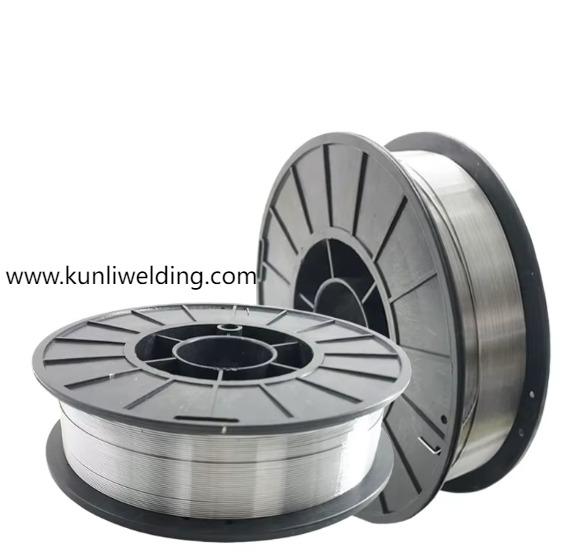
Manufacturing excellence begins long before a spool reaches a welding cell. In modern supply chains, Aluminum Mig Wire Manufacturers must blend metallurgy process control and practical packaging to deliver wire that feeds reliably, welds consistently and supports downstream finishing. As projects tied to electrification and infrastructure scale up, the expectations placed on producers increase: traceability, moisture protection, and repeatable dimensional control matter as much as chemistry.
A rigorous production flow starts with raw material sourcing and melt discipline. Producers commit to consistent alloy inputs and controlled melting practices so the base chemistry meets specification every time. From there the wire moves through cold drawing stages where diameter control and temper are established. Strict monitoring during drawing reduces variance in roundness and diameter which otherwise shows up as feed trouble in the gun and irregular bead appearance in production.
Surface treatment and cleaning are often overlooked by end users yet they determine arc stability and porosity performance. Quality lines include staged cleaning baths rinsing and controlled drying to remove oils and particulate from processing. Some producers apply a thin weld friendly film that protects the surface during storage without impairing feedability. When manufacturers document these steps and attach batch records to spools, procurement and quality teams gain confidence in repeatable performance across lots.
Dimensional control and inline inspection close the loop on mechanical consistency. Automated measurement systems flag deviations in diameter roundness and surface finish in real time so corrections are made before spools are completed. Vision systems detect scratches or foreign material caught in a wrap that could cause a feed hang. Plants that tie inspection outcomes to spool identification enable fast root cause work if a feed issue emerges on the shop floor.
Winding practice is a practical production detail with outsized operational effects. Proper winding tension spool geometry and core fit prevent wire memory and sudden unwind that can create drag between drive rolls and liners. Producers that match spool formats to common feeder types reduce the need for workarounds in the welding cell. Clear labeling of spool orientation and recommended mounting instructions help operators mount spools correctly across shifts and facilities.
Packaging and logistics preserve the gains from controlled production. Moisture barrier films protective inner cores and sturdy cartons minimize the risk of surface oxidation or mechanical deformation during transit. In volatile markets regional stocking practices and predictable shipping schedules shorten the path from order to arc. Suppliers that offer flexible spool weights and returnable core options support diverse shop setups and reduce packaging waste in longer programs.
Testing and qualification are practical enablers for buyers. Releasing representative sample spools and documented coupon results for typical joint types reduces trial cycles at the buyer facility. Mechanical tests visual inspections and feed trials on the exact feeder and liner used in the cell reveal how a spool will perform in production. Suppliers that participate in test runs and provide clear acceptance criteria accelerate qualification and reduce downtime during ramp ups.
Traceability and documentation are now procurement essentials. Linking each spool to production records, inspection reports and handling notes turns a manufacturing run into a verifiable product. When anomalies appear in production, quality teams can quarantine specific lots and work with the factory to determine whether an upstream event or a handling issue is responsible. This approach limits the scope of corrective action and preserves production continuity.
Sustainability and operational efficiency are influencing plant choices. Energy efficient drawing equipment solvent recovery for cleaning lines and programs to reduce scrap in the drawing and winding stages are part of responsible manufacturing practice. Buyers increasingly ask about these measures and include process transparency in supplier selection. Producers who can articulate their environmental controls make it easier for purchasers to align consumable sourcing with corporate sustainability objectives.
Operator training and field feedback close the loop between plant and user. Shared data on common feed issues, liner wear and drive roll profiles helps both sides identify avoidable interruptions. When manufacturers and fabricators establish a feedback cadence, continuous improvement targets become measurable on both sides. Quick adjustments in winding tension or finishing chemistry often eliminate recurring feed faults without capital expenditure on equipment.
Choosing a supplier that treats manufacturing as a system rather than a collection of steps reduces surprise work in production. From alloy control to spool packing and from inline inspection to traceable batch records, the disciplines inside the plant map directly to feed reliability, weld appearance and predictable qualification. To review product specifications and supplier documentation for aluminum MIG wire including ER5183 and related alloy offerings see the product information at https://www.kunliwelding.com/product/aluminum-alloy-wire/aluminum-alloy-welding-wire.html .

 Chinese